
Categories
Blog Data Migration

Types of Data Migration Explained: Storage, Database, Application & Cloud

Moving data may sound very boring, but in a way, I am glad when it is! Anything “exciting” about data migration usually comes when you face issues or challenges. 

Such challenges can easily disrupt your database migration or even cause data loss. 

So how can you protect yourself against such problems? 

The answer is in choosing the right data strategy for your database migration. This requires a complete understanding of the major types of data migration available. 

To help you plan your data migration strategy, I have created this detailed guide. It will help you keep everything running smoothly. 

Ready to make your data migration less stressful? Let’s discuss the four main types of data migration you can use, in the easiest way possible! 


Quick Overview: Four Main Types of Data Migration


Get a brief understanding of the main data migration types using the table below

Migration Type What Moves Common Reasons
Storage Migration Files and blocks Hardware upgrades, cost savings
Database Migration Structured data, schemas Platform changes, performance upgrades
Application Migration Whole apps with their data Modernization, cloud moves
Cloud Migration Anything to the cloud Scalability, cost, innovation


Main Types of Data Migration

Here is a more detailed look at the four major types of data migration available

    1 . Storage Migration
storage-migration

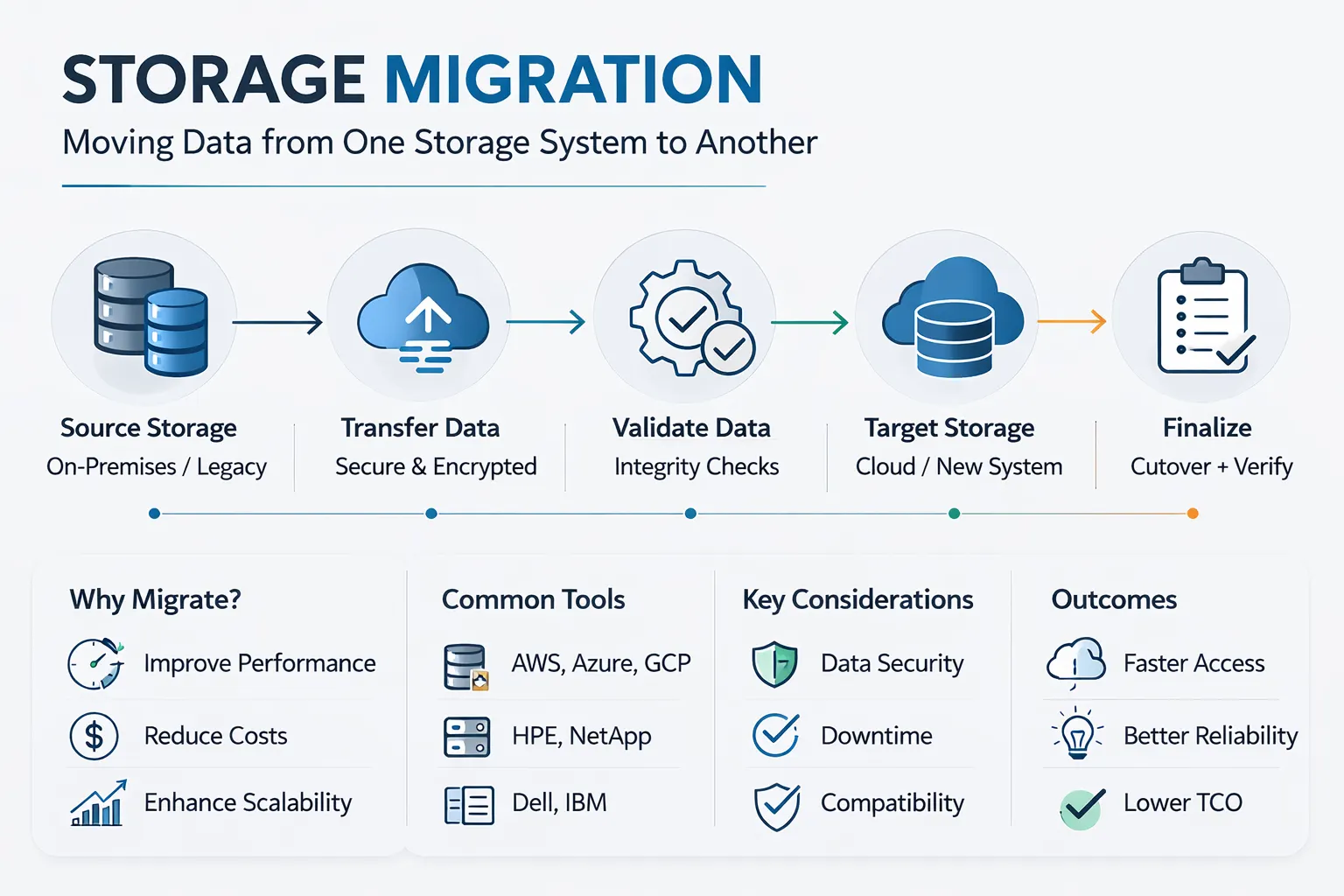
Among all available options, storage migration is considered the simplest way to perform database migration. It mainly refers to physically moving your data from one location to another. 

In most cases, this involves manually copying your data into a new storage. 

Useful For: 

  • Upgrading old hard drives to much faster solid–state drives (SSDs)
  • Moving your direct-attached storage to a flexible storage area network
  • Migrating your data to a more cost-effective storage option 
Smooth data migration services with free migration assessment by experts

Potential Challenges

You may experience disruptions to your data access during this transfer. This means users lose their connections and the company incurs significant downtime. 

To avoid such issues, plan ahead for any big data migration.


    2 . Database Migration
database-migration

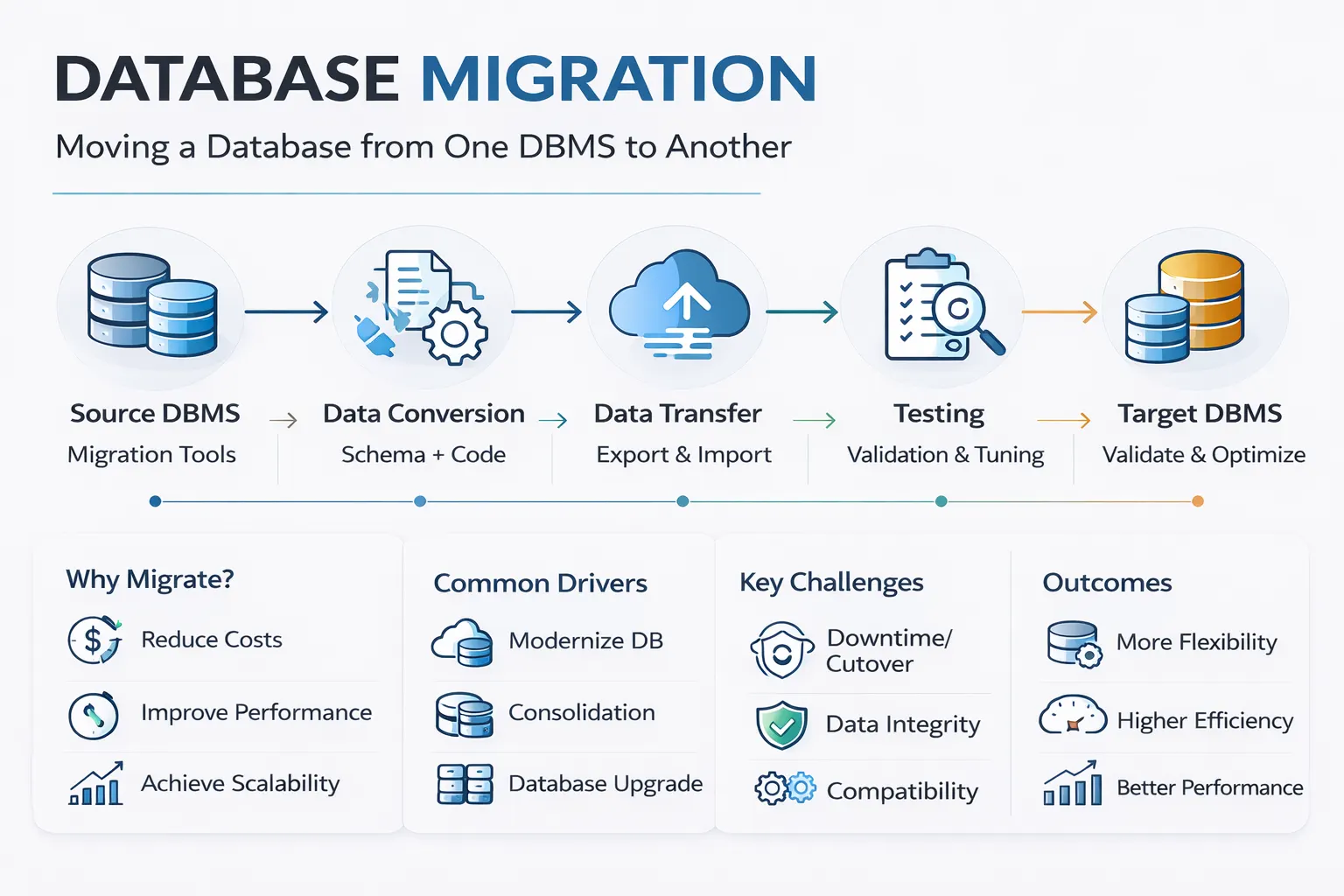
A database migration involves moving structured data from one system to another. Customer records, transactions, and even product descriptions are normally found in such structured data. 

Because such data needs to be rearranged in the target system as well, complications may arise.

Useful For: 

  • Moving from Oracle to PostgreSQL
  • Upgrading an old SQL Server
  • Moving off of on-premise data storage to a cloud-based solution.

Potential Challenges

All databases have specific relationships between the data points involved. Losing these relationships (or links) between them can break the entire structure. 

During migration, it is important to reserve and replicate these connections. 

Moreover, you may also face inconsistencies like: 

  • Compatibility in your schema 
  • Conversions between data types 
  • Maintaining the same performance

The solution? Make sure that you use specialized database migration tools that can handle your structured data. This will automate your migration and will protect against human error.

3 . Application Migration
application-migration

If you thought moving structured data posed challenges, wait till you try to move an entire application! 

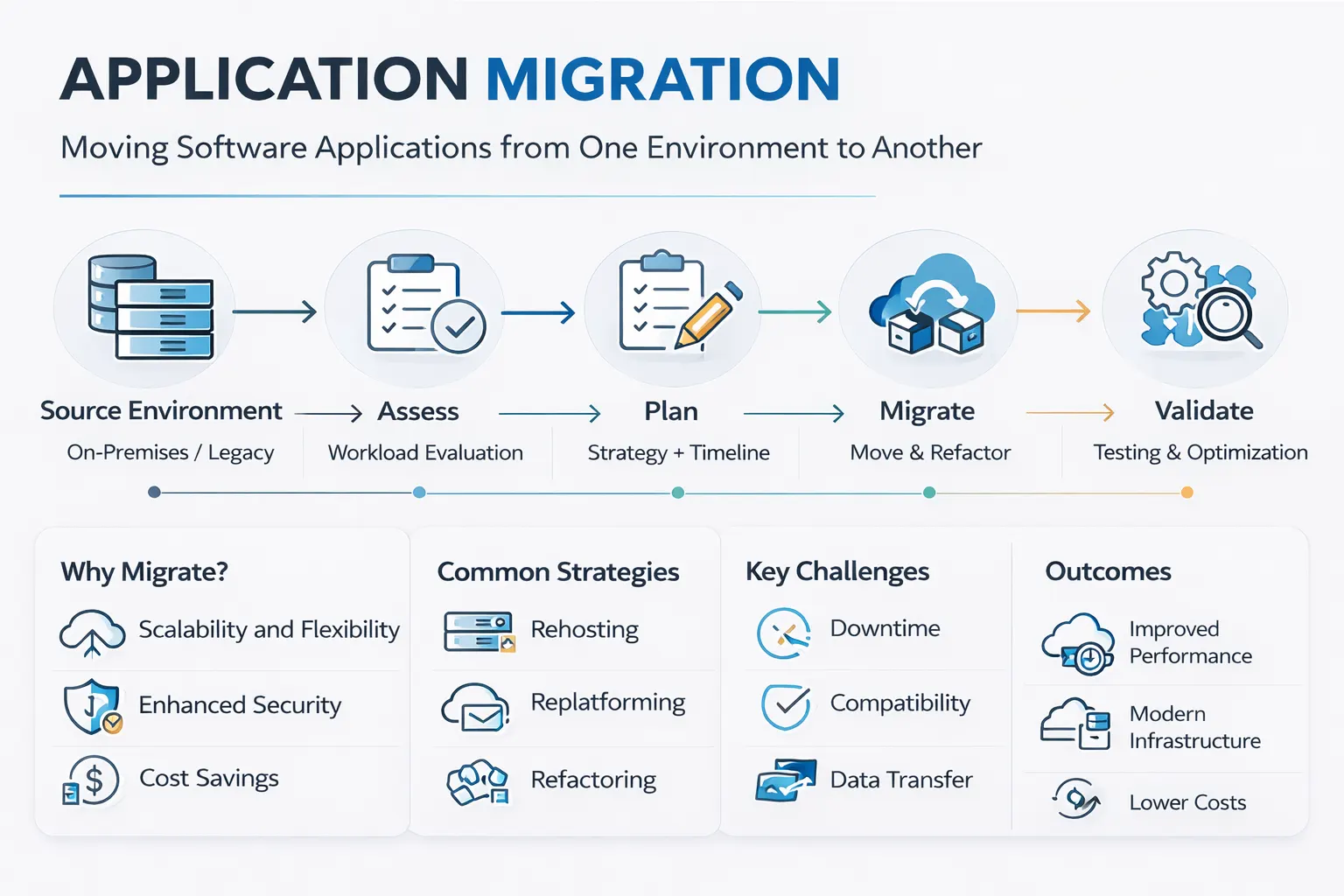
In application migration, you need to move an entire software application and its data to another system. This means moving everything from code, configurations, and dependencies in your data migration. 

Useful For:

  • Upgrading legacy CRM systems to a modern version 
  • Transferring your ERP system to a new infrastructure
  • Migrating your custom applications to new servers 

Potential Challenges

Moving an entire application comes with its own set of problems. Even a minor error or missing file can render the entire application unusable. 

To avoid this, experts recommend using a framework called “6 R’s”. It includes the following application migration strategies: 

Strategy What It Means When to Use
Rehost Lift and shift (move as-is) Quick moves, minimal changes needed
Replatform Lift, tinker, shift (minor tweaks) Need some cloud benefits without a full rebuild
Refactor Modify code for the new environment Want better performance, scalability
Rebuild Rewrite from scratch The old app can’t meet the new needs
Retire Shut it down No longer needed
Retain Keep it where it is Too risky or costly to move


4 . Cloud Migration

cloud-migration

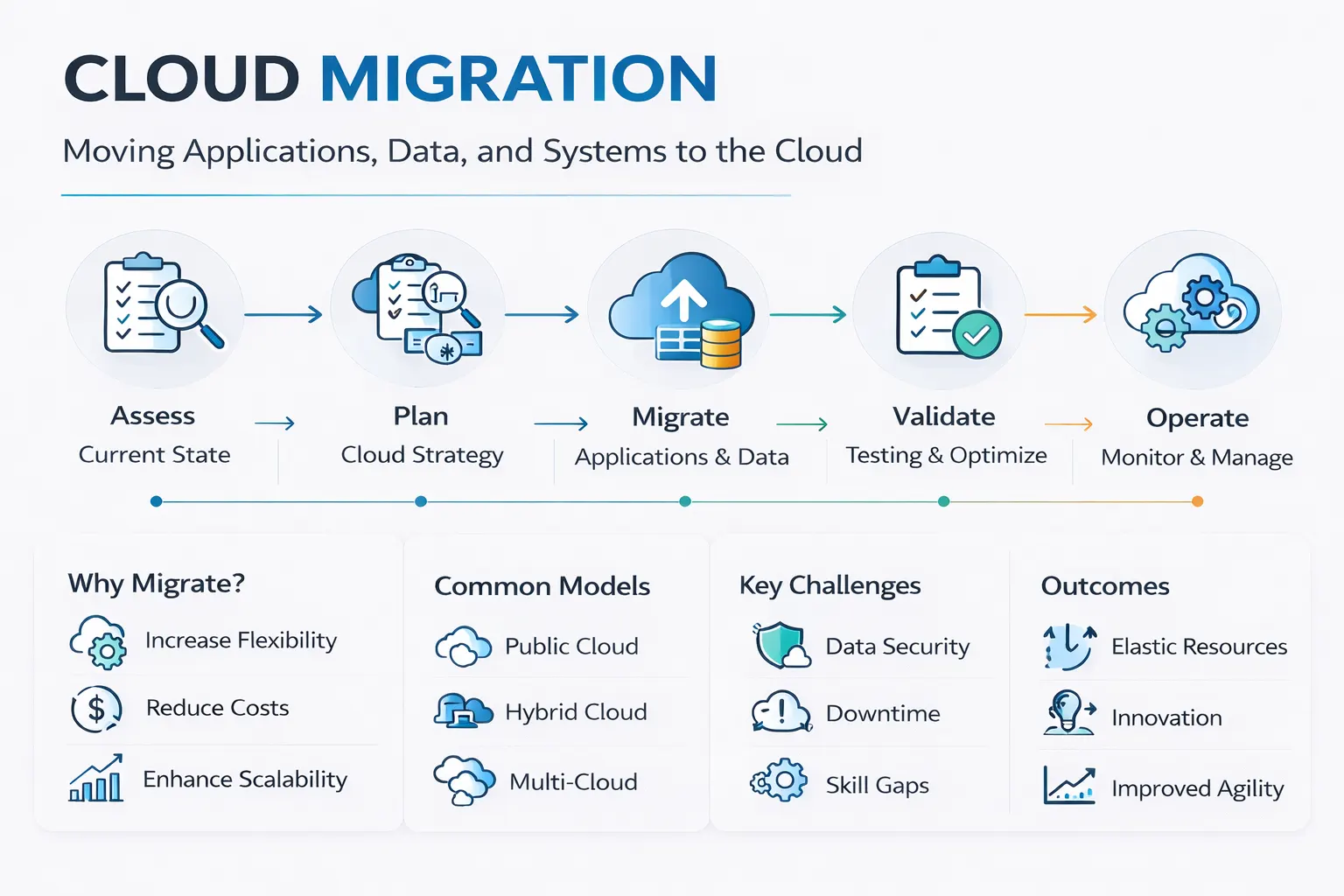
Cloud migration has become a very generic term. You can use it for most of the data migration types mentioned above

The only defining factor of a cloud migration is moving your data to the cloud

Useful For

  • Better scalability to grow without the need for hardware
  • Higher cost savings to pay only what you require 
  • Access to innovations like AI and other modern tools
  • Easier backup and recovery systems for better protection

One of the most popular methods of company data migration today is on-premises-to-cloud migration. This entails transferring information from your data centers to cloud service providers such as AWS or Azure.

Potential Challenges

This method has similar challenges and risks as the other methods above. 


How to Choose the Right
Migration Type


Confused about which option will best suit your needs. To help you decide, ask yourself the following questions

Question Likely Migration Type
Are you just upgrading hardware? Storage migration
Are you changing database platforms? Database migration
Are you moving whole applications? Application migration
Is the destination a cloud provider? Cloud migration (could be any of the above)


Data migration services offering secure, scalable, and stress-free migration with free consultation


Conclusion 

The key to designing a successful migration strategy is to gain a better comprehension of the different types of data migration.

It will help you decide on the right type of data migration to perform. But only deciding the right strategy is not enough to protect your data. 

For the best results, you will also need a dedicated partner to help execute your data migration flawlessly. This means connecting with an expert who specializes in all types of data migration. 

At Augmented Systems, we have a team of experts who can guide you in your data migration. Our team has years of experience assisting businesses with the intricate issues that arise during data migration.

With our support, you will be able to migrate your data using proper security guidelines. Using these proven methods ensures that your data never falls into the wrong hands.

Ready to strategise your next data migration? Contact Augmented Systems today to receive a free consultation! 

FAQs 

1. What are the main types of data migration?

The four main types of data migration are storage migration (moving files), database migration (moving structured data), application migration (moving entire software systems), and cloud migration (moving anything to the cloud). Each type requires different strategies and tools.

2. What is database migration?

Database migration is the process of moving structured data from one database platform to another. This could mean switching from Oracle to PostgreSQL, upgrading SQL Server versions, or moving on-premise databases to cloud-managed services like Amazon RDS.

3. What is involved in application migration?

Application migration means moving an entire software application—including its code, configurations, dependencies, and associated data—to a new environment. Common approaches include rehosting (lift-and-shift), replatforming (minor tweaks), or refactoring to improve cloud performance.

4. What is on-premises to cloud migration?

On-premises-to-cloud migration is the process of moving workloads from local data centers to public cloud providers such as AWS, Azure, or Google Cloud. Benefits include better scalability, cost savings, and access to modern AI and analytics tools.

5. When should a company hire a data migration consultant?

You should hire a data migration consultant when dealing with complex migrations, massive datasets, critical systems where downtime is costly, or when previous migration attempts have failed. A consultant brings proven methodology and experience to avoid common pitfalls.
Categories
Blog Data Migration

What Is Data Migration? Definition, Types, Process, Tools & Best Practices

“Moving data” is a pretty simple-sounding process, isn’t it? 

Well, in a nutshell, it’s all about copying and pasting data from one place to another.

But in real life, it’s a whole different ball game.

For an enterprise, data migration is one of the most dangerous projects it may undertake in its entire lifetime. If something goes wrong in the data migration process, they may lose customer data and even experience complete data loss.

How to avoid these problems? It’s simple!! Just select a proper data migration strategy before you migrate data. This can lead to better technology utilization and cost savings.

Through this guide, you will get to know everything about data migration.

Let’s start with a basic overview of data migration!

What Exactly is Data Migration?

Let’s start with an easy definition of data migration.

Data migration involves moving data from one system to another. This could be either

  • from an old database to a new one or
  • from local to the cloud.

“Moving” your data is different from creating a backup. You are not just copying data; you are moving it to a new system. This system will then become your primary access point.

Any successful migration requires the following factors:

  • Accuracy: All data values need to be extremely accurate 
  • Completeness: The entire data must be moved to the new system
  • Continuity: Businesses should continue to run during the move

Comparing Data Migration vs. Data Integration

You might be confused about the difference between data migration and integration.

Here is how you can differentiate between them:

  • Data Migration

This is a one-time process that requires moving your entire data. Once the data is moved, your old system will be wiped.

  • Data Integration

This refers to an ongoing process. It involved connecting systems that sync data.

The process usually operates in real time and requires both systems to run in parallel.

Professional data migration consultation for cloud, database, and enterprise data transfer

Main Types of Data Migration

A deeper understanding of the types of data migration is beneficial. It can help you plan your data migration strategy more effectively.

  • Storage Migration

This process involves moving data between different storage systems. It usually uses hard drives or SSDs to achieve this data transfer.

It truly is the simplest way to migrate data for your system.

  • Database Migration

A more advanced process, which involves moving your database files to a new platform. Migration of data from Oracle to PostgreSQL, or from SQL to Azure, will fall under this.

The success rate of database migration depends on the data you have stored. Depending on its complexity, advanced procedures or conversions will be required.

  • Application Migration

In application migration, you are moving an entire application to a new environment. This means migrating all related app data to a new or different platform.

The process involves migrating both the database and the app’s storage at the same time.

  • Cloud Migration

Moving your data from on-premises to the cloud is quite common.

Companies usually do this to reduce costs and improve their scalability.

Today, on-premises-to-cloud migration is also underway to make AI data tools more easily accessible.

  • Legacy System Migration

In a legacy system migration, your data migrates from an outdated platform to a modern one.

This either means upgrading your entire system or moving to a modern platform.

The Data Migration Process: Step by Step

Here is how a successful data migration methodology should take place:

Step 1: Discovery and Assessment of Data

In this step, you need to understand your data and sort it. 

Profiling your data helps make your migration easier and error-free.

Step 2: Planning and Designing Your Strategy

Now that you know your data, it’s time to create a data migration strategy.

This means choosing the right approach and listing the tools you require.

The common approaches used for data migration are:

  • Big Bang: Move everything at once with a planned downtime
  • Phased (Trickle): Migrate your data incrementally alongside the older system
  • Parallel Run: Running both systems together for verified data migration

Step 3: Data Profiling and Cleansing 

Before you move anything, ensure that your data is clean. This means removing any duplicates and fixing any formatting issues.

Any data migration done on unclean data will also corrupt your new system.

Step 4: Pilot Testing Your Strategy

Make sure that you run a test migration before copying your entire data.

This can help you recognise any issues. It will also help you resolve them quickly.

Step 5: Execution of the Data Migration

Make sure that you execute your data migration according to your plan.

Monitor closely for any errors and keep everyone informed about the progress.

Step 6: Validation of the Migrated Data

After the migration is complete, verify everything. Check key data and run user acceptance tests.

If any numbers don’t match, investigate and solve before you declare success.

Step 7: Cutover and Decommissioning

Once your data is validated, you can shut down your old system.

Just make sure you divert all users to the new one before you do so.

Top Data Migration Tools

Here are the right data migration tools you can use during the process:

Tool Category Examples Best For
Cloud Migration Tools AWS Migration Tools, Azure Migrate Moving to cloud platforms 
Database Migration Tools AWS DMS, Azure Database Migration Service Database platform changes 
Big Data Migration IBM Big Replicate Moving large datasets, petabyte-scale 
Data Integration Platforms Various ETL/ELT tools Ongoing data movement and transformation 

Data Migration Best Practices

Make sure that you follow these data migration best practices during the process: 

  • Ensure that you back up your data 
  • Define your requirements clearly before starting the process 
  • Assemble a team of specialists that can handle the migration 
  • Clean your data and remove any data inconsistencies
  • Test your data after the migration ends 
  • Ensure security and privacy during the migration

Expert team assisting businesses with secure and efficient data migration planning

Conclusion

Data migration should not be risky or terrifying. It is a common practice that companies regularly carry out.

The problems arise when data migration is done without using the right strategy. This leads to data corruption and loss during the transfer.

For any major migration, you should consider joining hands with Augmented Systems. They are a software consulting firm known to market leaders for their reliability and success.

Augmented’s team can provide expert data migration services and years of experience. With their help, you can easily avoid the risks associated with this process.

Aiming to move your confidential data properly? Make sure that you contact Augmented today to receive a free consultation!

FAQs 

1. What is data migration in simple terms?

What is data migration? In simple terms, it’s the process of moving data from one system to another. This could mean transferring files to new storage, switching database platforms, or moving entire applications to the cloud. The goal is to make the new system your primary system.

2. What is the difference between data migration and data integration?

Data migration vs data integration comes down to permanence. Migration is a one-time process in which you transfer data and stop using the old system. Integration is ongoing, with the systems continuing to sync data between them in real-time or near real-time.

3. Can you share some data migration examples?

Common data migration examples include moving from on-premises servers to the cloud (cloud migration), switching from Oracle to PostgreSQL (database migration), upgrading from legacy hard drives to new storage arrays (storage migration), or migrating from legacy CRM to Salesforce (application migration).

4. What are the best data migration best practices?

Key data migration best practices include backing up everything before starting, cleaning your data before moving it (e.g., removing duplicates, fixing inconsistencies), testing continuously in staging environments, protecting data with encryption, and keeping stakeholders informed throughout the process.

5. When should a company hire professional data migration services?

Consider professional data migration services when you’re dealing with complex legacy systems, massive data volumes, critical systems where downtime costs money, or when previous migration attempts have failed. A specialist brings proven methodology and experience to avoid common pitfalls.