
As technology evolves, data terms are getting more confusing than ever.
First, there were data lakes. Then came data warehouses.
Now, every business is talking about data mesh and data fabric.
So, what do these terms actually mean? And which is the right one to choose for your business?
In this guide, I will help you understand data mesh vs data fabric. This will make your decision more informed and easier.
Let’s start by learning more about each method.
What is Data Mesh?
Questioning what is data mesh vs data fabric? Well, we first need to define them
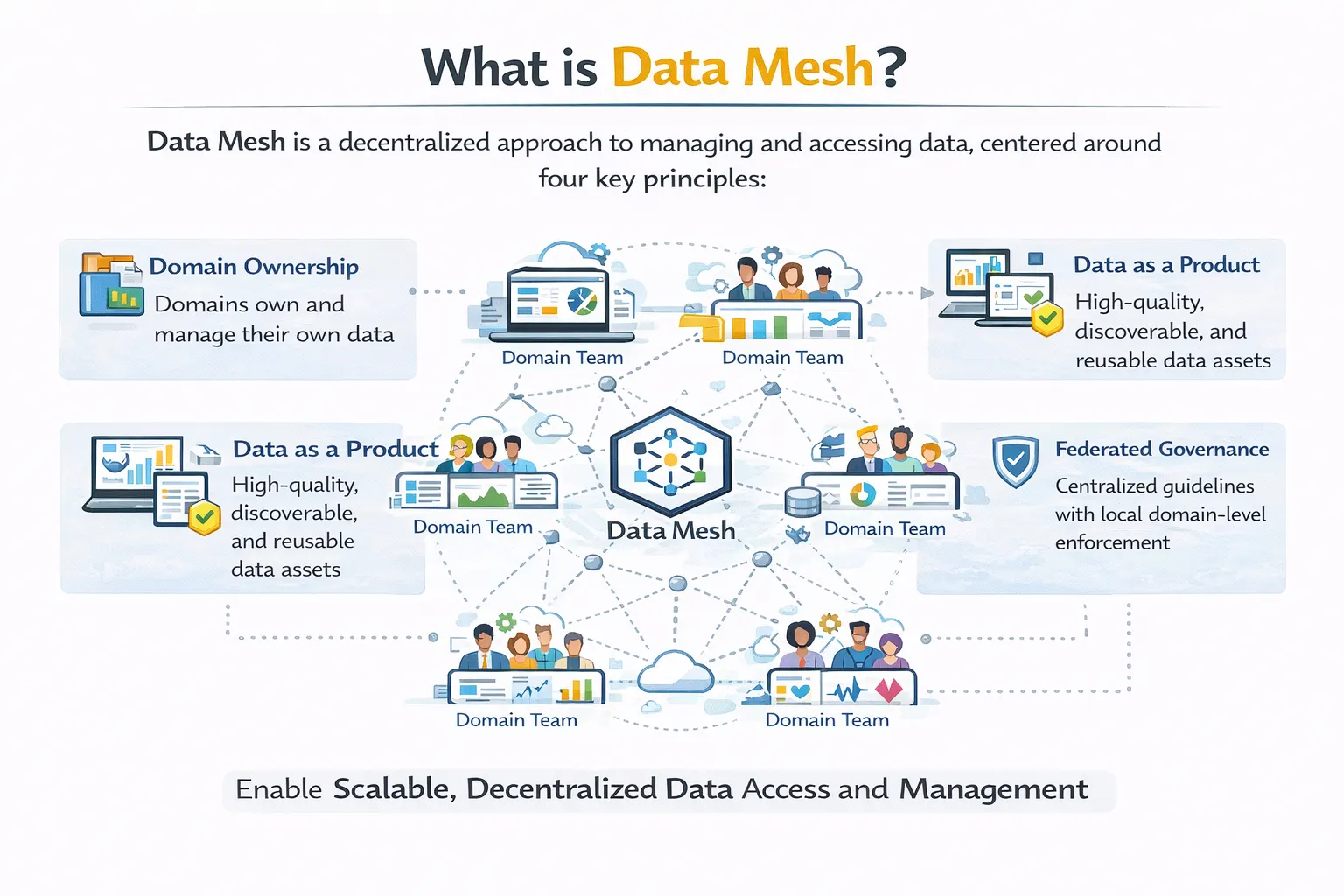
Data mesh is a way to organize your data processes easily.
It involves each business domain taking responsibility for its own data.
While most companies rely on a central data team, this removes that requirement. It puts the data management and data warehousing in the hands of each department.
As each of your teams handles its data, they start treating it like a product. This includes being in charge of their own data cleansing process as well.
Also, this method helps other teams collaborate using the same data.
Key Principles:
- Domain ownership by each team
- Using data as a product, alongside its quality and documentation
- Promoting self-service platforms managed by teams
- Global governance of each domain
What is Data Fabric?
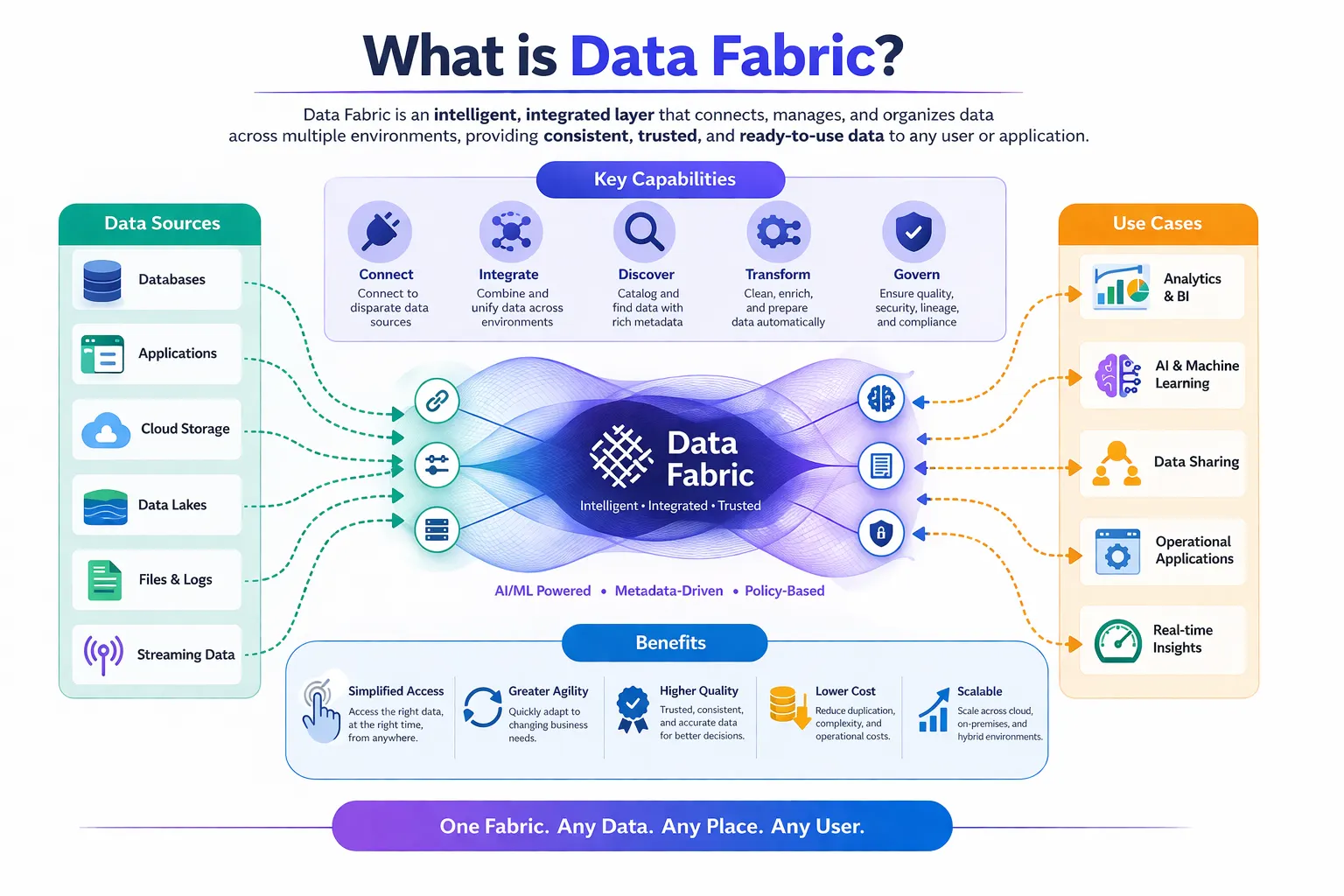
Data fabric is quite different. It relies on a technology architecture instead.
In a data fabric, a virtual layer is created that connects all data sources in your business.
Such usage enables easier data finding and management across systems.
The main benefit of a data fabric is the level of connectivity it provides. It enables easier data migrations and teamwork.
Key Principles:
- Making data discovery automatic and fully integrated
- Activating metadata of each data point
- Provides AI-powered recommendations
- Ability to work across both local and cloud data
Data Mesh vs Data Fabric: Key Differences
Here are the main differences between data mesh and data fabric
| Aspect | Data Mesh | Data Fabric |
| What it changes | Organization and culture | Technology and architecture |
| Primary focus | Who owns data | How data connects |
| Implementation | New team structures | New technology layer |
| Best for | Large organizations with many domains | Complex, scattered data environments |
Data Mesh vs Data Fabric vs Data Lake
Let’s dive deeper and compare these three popular data platforms
| Concept | What It Is | Main Purpose |
| Data Lake | A storage system | Store raw data cheaply |
| Data Mesh | An organizational model | Decentralize data ownership |
| Data Fabric | A technology architecture | Connect data across systems |
When to Choose Data
I recommend that you choose Data Mesh when
- There are clear business domains like sales and marketing at your company
- You have a central team that is becoming a bottleneck
- You have the required budget for this change
- The teams at your company are motivated to be data responsible
When to Choose Data Fabric
Here is when you should opt for Data Fabric instead
- All of your data is scattered across multiple systems
- You require automated discovery and integration for your data
- You don’t require the reorganization of your team
- You or your team requires real-time data access across sources
Can I use both Data Mesh and Data Fabric?
Of course!
Many experts even recommend using both methods at large businesses.
Here is how you can do it
| Layer | What It Does | Example |
| Data Mesh (Organizational) | Defines who owns data | The sales team owns the sales data product |
| Data Fabric (Technical) | Connects the data products | Automatically discovers and links sales and marketing data |
Quick Decision Guide
Still feeling a bit confused
Here are sample scenarios where you should use either method
| Your Situation | Best Choice |
| The central data team is overwhelmed | Data mesh |
| Data is scattered across 50+ systems | Data fabric |
| You have clear, separate business domains | Data mesh |
| You need real-time data integration | Data fabric |
| You want to change both culture AND technology | Both (mesh first, then fabric) |
Conclusion
Comparing data mesh vs data fabric is not really the right way to use them
They both are meant to solve two separate problems
These include
- Using data mesh to fix your current organizational bottlenecks
- Using data fabric to connect technical data integrations
For you, the right choice depends largely on your present and future needs.
To help make this issue easier, you should consult a dedicated software partner
My recommendation? Choosing our team at Augmented Systems for your every need
We have spent decades building trust in the industry as a valued partner. Our data strategies continue to bring the best ROI for global clients
Moreover, our team excels at both data mesh and data fabric integrations. We are experts dedicated to making your data work for you
Contact Augmented Systems today and connect with us to solve your data chaos.

FAQs
1. What is the difference between data mesh and data fabric?
The main difference between data mesh and data fabric is focus. Data mesh is an organizational model for who owns data (domain teams). Data fabric is a technology architecture for how data connects across systems (automated integration).
2. What is a data mesh example?
A data mesh example is a retail company where the sales team owns sales data, marketing owns campaign data, and each team publishes clean data products. Other teams access these directly without going through a central bottleneck.
3. Should I choose data mesh or data fabric?
Choosing data mesh or data fabric depends on your pain point. If your central data team is overwhelmed, choose data mesh. If your data is scattered across many systems you can’t connect to, choose a data fabric. Many companies use both.
4. How do data mesh, data fabric, and data lake compare?
Data mesh, data fabric vs data lake solve different problems. A data lake stores raw data cheaply. Data mesh organizes who owns data. Data fabric connects data across systems. They work well together, not as competitors.
5. Can data mesh and data fabric work together?
Yes. Many experts recommend using both. Data mesh defines who owns data products. Data fabric provides the technology layer that automatically discovers, connects, and governs those data products across domains.